
Not a policy. An architecture you can check.
Every practice owes its clients confidentiality, and most software asks you to take separation on trust — one database, one shared table, a column to tell the tenants apart. Sapphire Legal is architected around real per-tenant isolation and a private AI instead. It matters most sharply when two of your clients compete, which is a fractional GC's ordinary week, and it is the same architecture under a solo practice, a law firm and a regulated organization.
- Quick answer
- How does Sapphire Legal keep client data isolated?
- Sapphire Legal gives each client firm its own database, its own document storage, and a private legal AI that runs inside our own AWS account — not a public chatbot. Each client's data lives in a different place from every other client, not in a shared database with a tenant ID column. The AI that drafts contracts and analyzes calls is served privately through Amazon Bedrock inside that account: prompts and responses are never used to train a model — Bedrock's terms do not permit it — and nothing is retained once the request completes. Privileged client call transcripts are locked behind an attorney review step that's recorded in an audit log. That is what a duty of confidentiality actually requires, and it is what holds up in the hardest case — when two of your clients are competitors.
Isolation is the foundation, not a feature.
Most multi-tenant software puts all clients in one database and relies on code to keep them apart. That's fine for a CRM. It is not fine for privileged client files. Here's how Sapphire Legal is different.
Per-tenant database
Every client firm gets its own database — not a shared table with a tenant column, but a separate database entirely. Data cannot leak between clients because it doesn't live in the same place to begin with.
Per-tenant storage
Each client's documents are stored in an isolated location with encryption at rest. Optional dedicated storage buckets are available for clients whose compliance team wants physical separation.
Private legal AI in AWS
The AI that drafts your documents and analyzes your calls runs privately inside our own AWS account, in US regions — models we host ourselves alongside Claude models served privately through Amazon Bedrock. It's not a public chatbot. Your client data is never used to train a model, and nothing is retained once a request completes.
Privileged calls stay privileged — and we can prove it.
Upload a client-call recording to Sapphire Clarity and it becomes searchable, structured legal intelligence. When the call is marked attorney-client privileged, the resulting transcript is locked behind an explicit review step. An attorney has to confirm they've reviewed the material before anyone else on the team can open it — and that review is logged with name, timestamp, and justification.
If privilege is ever challenged, you have a defensible audit trail showing exactly who accessed what and when.
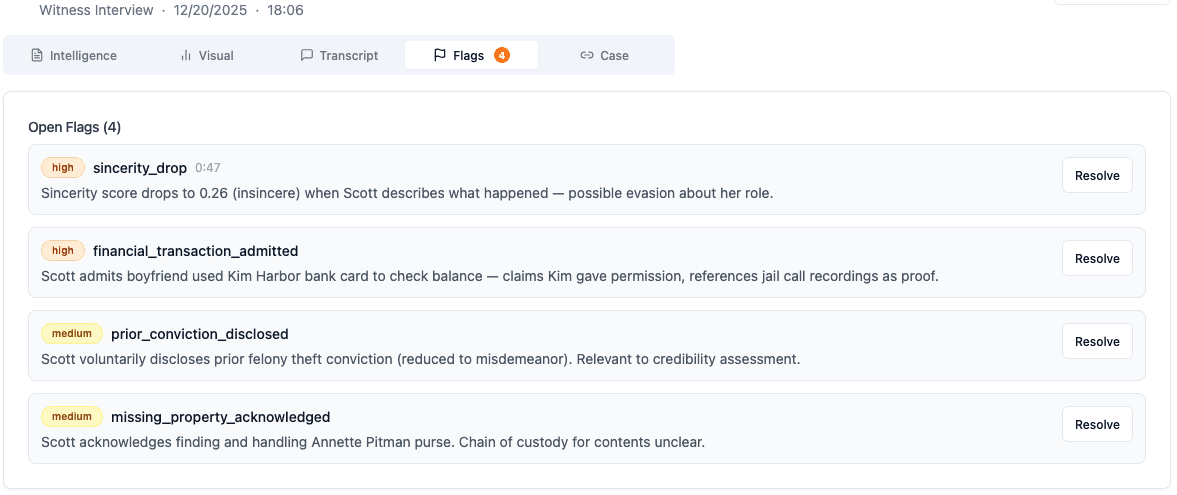
- Attorney review required before transcript access
- Audit log with reviewer name + timestamp
- Privileged flag persists across exports
- Access can be revoked at any time
- Conflict check runs automatically on intake
Security questions, answered plainly.
Does Sapphire Legal train AI models on my client data?
Is my data shared with OpenAI, Anthropic or any other AI provider?
What does Sapphire Legal log about my use of the AI?
How is my firm’s data separated from other firms?
Is Sapphire Legal confidential enough for privileged material?
Where does my data physically live?
Who at Sapphire Legal can see my documents?
What happens to my data if I cancel?
Does the AI show where an answer came from?
Need the technical deep-dive?
If your clients' security team wants the full architecture diagram — database isolation, token verification, audit logging, the whole thing — we have it ready. Book a demo and we'll send it over before the call.